
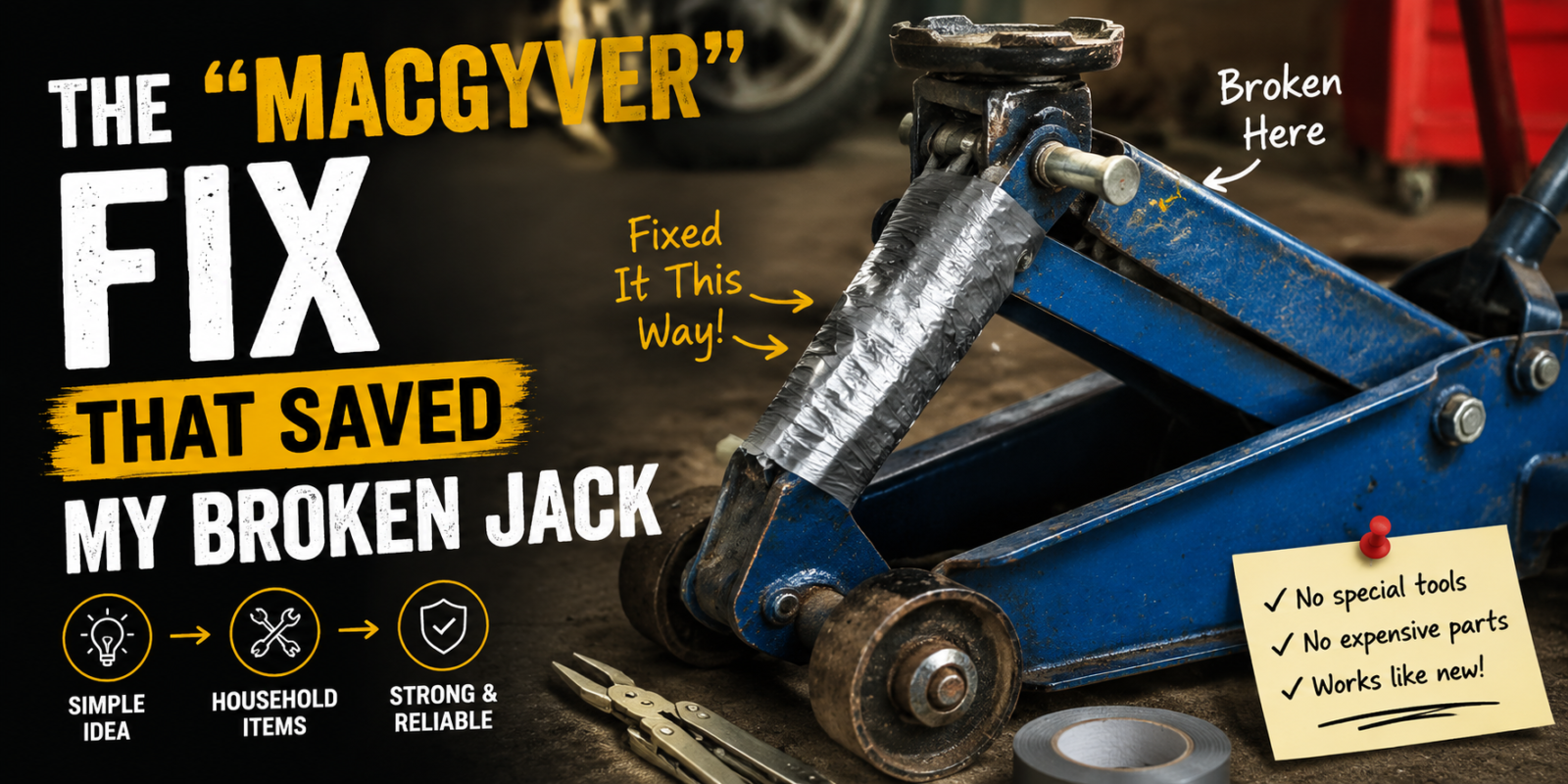
There is a special kind of panic that hits when a simple tool fails at the worst possible moment. You know the scene: a flat tire, fading daylight, a roadside shoulder that feels much narrower than it should, and a jack that suddenly refuses to cooperate. It is not just frustrating. It is personal. A broken jack can make you feel stranded, powerless, and one bad decision away from a much bigger problem.
That is exactly why knowing how to think clearly, improvise safely, and respect the limits of your equipment matters so much. Among all the tools people keep in their trunks, car jacks are often the least appreciated until they become the most important thing in the world. And when one fails, what saves the day is rarely brute force. It is patience, caution, and a practical workaround that gets you home.
This guide walks you through the emotional reality of a broken jack, the kind of “MacGyver” fix that can help in a pinch, and the safety rules you should never ignore. Because while cleverness can rescue a bad situation, carelessness can turn it into a dangerous one.
Why car jacks Fail at the Worst Time
Let us be honest: most people do not inspect their emergency tools until something goes wrong. A jack gets tossed into a storage compartment, forgotten for months or years, then expected to perform flawlessly on command. Dust builds up. Threads rust. Hydraulic seals weaken. Metal bends. Suddenly, a tool that seemed sturdy feels fragile and unreliable.
That is one reason car jacks can fail without much warning. Another is misuse. A jack placed on uneven ground or under the wrong lift point is already under stress before the vehicle even starts to rise. Add age, corrosion, or a rushed setup, and the failure can happen in seconds.
There is also the emotional side of it. Stress changes judgment. You may hurry. You may skip steps. You may convince yourself that “good enough” is safe enough. It usually is not. A broken jack is not just a mechanical problem. It is a test of calm thinking under pressure.
The Emergency “MacGyver” Fix That Bought Time
Let us be crystal clear: a temporary fix is not the same as a permanent repair. If a jack is structurally cracked, leaking badly, or collapsing under load, it should not be trusted. But if the issue is something like slipping on soft ground, a handle not getting enough leverage, or a base that will not stay stable, there are a few emergency measures that can buy you enough time to change a tire safely.
The most common lifesaver is creating a firm, flat base. A thick wooden board, a dense rubber mat, or even a sturdy flat piece of metal can help distribute weight and stop the jack from sinking into gravel, dirt, or hot asphalt. This small adjustment has saved many motorists from watching their jack tilt sideways in horror.
If the handle mechanism is the problem, a carefully fitted metal pipe can sometimes extend leverage. That said, this should only be done gently and never with jerking force. The goal is controlled pressure, not a dramatic wrestling match on the roadside.
And if you are using a trolley car jack, stabilization becomes even more important. Wheels need room to roll slightly as the vehicle rises. If they bind, the jack can shift unpredictably. A smooth, level surface is not a luxury. It is part of the tool’s design.
A small story comes to mind here about the word garner. Years ago, a schoolteacher told a class that trust is something you garner slowly and lose quickly. It sounded simple then, but it fits perfectly here. Your tools must garner your trust through maintenance, not assumptions. If they have been neglected, they have already warned you.
When a trolley car jack Needs More Than Hope
Sometimes the issue is not dramatic at all. Sometimes a car-jack still lifts, but it groans, stutters, or drifts. That is often when people make the mistake of “just trying one more time.” But hope is not a repair strategy.
If a trolley car jack shows signs of hydraulic weakness, the safest move is to stop using it for anything beyond the bare minimum, and only if the vehicle can be supported immediately with jack stands or another secure backup. Never put any part of your body under a car held up by a questionable jack. Not a hand. Not a shoulder. Not even for “just a second.”
This is where improvisation has limits. Wheel chocks, solid blocks behind the tires, hazard lights, and careful positioning can make a dangerous moment much safer. But they do not magically restore a damaged tool. What they do is reduce risk while you finish the job or wait for help.
There is another little anecdote worth sharing, this one about nudge. A neighbor once fixed a stubborn garden gate not by kicking it, but by giving the hinge pin the slightest nudge with a screwdriver handle. That tiny movement changed everything. Roadside fixes are often like that. Not dramatic. Not glamorous. Just one smart adjustment that turns chaos into control.
How to Showcase Smart Safety Before You Ever Need It
Preparation does not feel exciting, but it can be the difference between fear and confidence. The best way to showcase readiness is to inspect your tools before an emergency happens. Check for rust, bent components, leaks, missing parts, and worn contact points. Test the jack at home in a safe environment. Make sure you know exactly where your vehicle’s lift points are.
Keep a few simple extras in the trunk: a sturdy board, gloves, a flashlight, wheel chocks, and a reflective vest. These items do not take much space, but they can completely change the experience when car jacks have to come out unexpectedly.
A quick anecdote about showcase fits here. At a local community event, someone once used an old wooden display table to showcase handcrafted tools. The table was not fancy, but it was solid, dependable, and did its job beautifully. That is what you want from emergency gear. Not style. Not hype. Quiet reliability when it matters most.
What to Do After the Immediate Crisis Passes
Once the tire is changed or the vehicle is safe, do not simply put the broken tool back and forget about it. Replace or professionally repair it. Inspect the spare tire as well. Repack your emergency kit. Review what went wrong and what worked.
Moments like these stay with you. They remind you how quickly ordinary routines can become stressful tests. But they also teach something valuable: you do not always need a perfect situation to solve a problem. You need a steady mind, respect for safety, and enough preparation to respond without panic.
When car jacks fail, the experience can feel overwhelming. Yet even then, a practical fix, applied carefully, can save the day. And that is the real lesson behind any so-called “MacGyver” moment. It is not about reckless improvisation. It is about using what you have, thinking one step ahead, and getting yourself back to safety with wisdom instead of luck.