
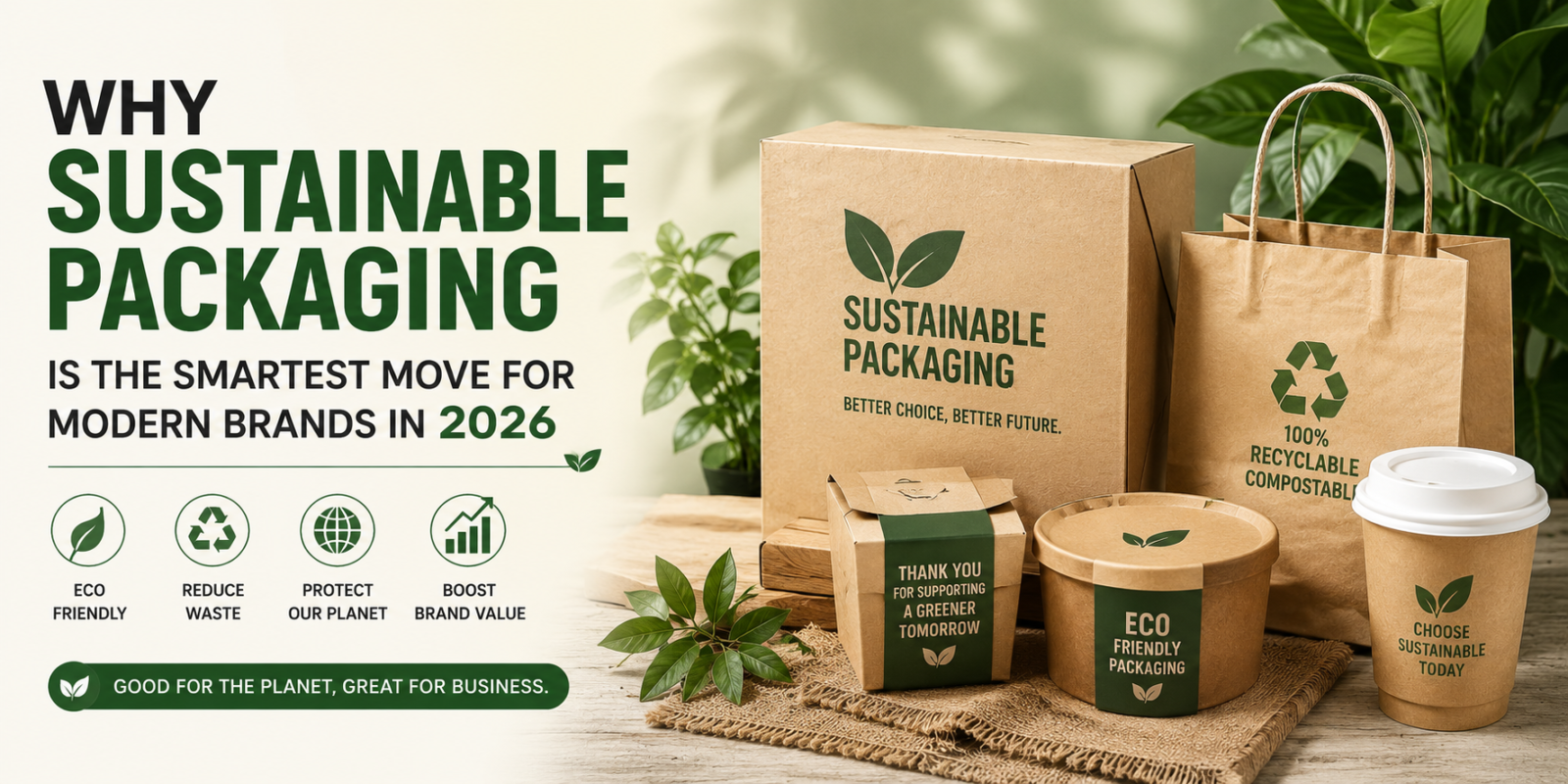
Sustainability used to be a bonus. A nice-to-have. Something brands mentioned in press releases but didn’t always follow through on. That era is over.
In 2026, sustainable packaging is a business necessity. Retailers are requiring it. Consumers are demanding it. Governments are legislating it. And brands that haven’t made the shift yet are falling behind — not just in perception, but in real commercial outcomes.
This post breaks down what sustainable packaging actually means, why it matters more than ever right now, and what modern brands should know before making the switch.
What Sustainable Packaging Actually Means
The phrase gets thrown around a lot, so let’s get specific. Sustainable packaging refers to packaging that is designed and produced in a way that reduces its environmental impact across its full lifecycle — from raw materials to end-of-life disposal.
That can mean several things depending on the product and format. It might mean using recyclable materials. It might mean reducing the total amount of material used. It might mean switching to compostable films, using post-consumer recycled content, or choosing packaging that supports refillable models.
What it does not mean is simply slapping a green label on your bag and calling it eco-friendly. That kind of greenwashing is increasingly risky — both legally and commercially. Consumers are more educated than ever, and they can spot the difference between genuine sustainability and marketing spin.
The Business Case for Eco-Friendly Packaging
Let’s talk about the numbers. A growing body of research shows that eco-friendly packaging directly influences purchasing decisions. Studies consistently show that a significant share of consumers — especially younger shoppers — are willing to pay a premium for products with credible sustainability credentials.
Beyond consumer preference, there’s the regulatory angle. Extended Producer Responsibility (EPR) laws are now in effect across multiple US states and many countries globally. These regulations require brands to take financial responsibility for the end-of-life management of their packaging. Companies that haven’t prepared for this are facing unexpected costs.
And then there’s supply chain efficiency. Sustainable flexible packaging — think lightweight pouches replacing heavy rigid containers — uses less material, weighs less, and ships more units per pallet. That has a direct impact on freight costs and carbon footprint.
What Retailers Are Requiring Now
Major retailers, including Walmart, Target, and Costco, have all published packaging sustainability commitments with specific targets. Some require a percentage of recycled content. Others are phasing out certain plastic formats entirely.
If you sell through retail, you need to know what your buyers are asking for. The brands that proactively address these requirements are building stronger retailer relationships. The ones that ignore them are getting dropped from planograms.
Recyclable Packaging Materials: What Actually Works
Not all recyclable packaging materials are equal. The term “recyclable” on a label means the material can theoretically be recycled — but that doesn’t always mean it will be, depending on what infrastructure exists in a given region.
Mono-material flexible films — single-layer PE or PP structures — are currently the gold standard for recyclable flexible packaging. Because they’re made from one type of plastic, they can be processed through standard film recycling streams at many major retailers.
Multi-layer laminates that combine different plastic types, foil, and paper are much harder to recycle. Many of them can’t be processed through current systems at all. If you’re using this kind of structure now, it’s worth asking your supplier about alternative materials that deliver similar barrier performance with better end-of-life outcomes.
Sustainable Packaging for Food and Beverage Brands
Food packaging has always faced a difficult tradeoff: the packaging needs to protect the product, but the packaging itself has an environmental impact. Custom packaging solutions today are getting better at resolving that tension.
Compostable films made from PLA (polylactic acid) or other bio-based materials are now available for certain food categories. These work well for dry goods, snacks, and products that don’t need ultra-high barrier protection.
For products that do need high barrier performance — coffee, pet treats, supplements — the answer is often a recyclable mono-material structure rather than a compostable one. The key is matching the material to the product’s actual requirements. Working with a knowledgeable supplier is essential here.
Brands partnering with teams like contipackinc benefit from the kind of guidance that helps them choose the right sustainable structure from the start — rather than discovering after production that their packaging doesn’t meet retailer requirements or regulatory standards.
Green Packaging Trends Shaping the Industry
Several green packaging trends are gaining real traction right now, and brands that track them will be better positioned for the next few years.
Mono-material structures are leading the charge on recyclability. Digital printing is enabling short-run sustainable packaging without the waste of traditional plate-based printing. Refillable packaging systems are emerging in beauty and household categories. And brands are starting to use QR codes on pack to communicate end-of-life instructions directly to consumers.
Lightweighting — using thinner films and less material overall — is also getting renewed attention. Not just because it reduces material costs, but because lighter packaging means lower freight emissions. When you’re shipping thousands of pallets per year, even small reductions in pack weight add up to meaningful carbon savings.
The Role of Post-Consumer Recycled Content
Post-consumer recycled (PCR) content is plastic that has been collected, processed, and reintroduced into new packaging materials. Using PCR content reduces demand for virgin plastic and gives existing plastic a second life.
More brands are incorporating PCR into their packaging — typically as a percentage of the total film structure. 30% PCR is a common starting point. Some brands are pushing toward 50% or more. The challenge is that PCR can affect print quality and seal consistency, so it requires careful calibration during production.
How to Make the Switch Without Disrupting Production
Switching to sustainable packaging doesn’t have to mean stopping your line and starting over. The most practical approach is to phase in sustainable materials as your current packaging runs out, using each reorder as an opportunity to upgrade the structure.
Start with a packaging audit. Identify which of your current formats have the most viable sustainable alternatives available right now. Prioritize formats used at high volume — that’s where the environmental and commercial impact is greatest.
Then, work with your packaging supplier to source samples and run trials. Test the new material on your fill line before you commit to a full run. Pay attention to seal integrity, run speed, and any changes in print quality.
Many brands find it helpful to consolidate packaging procurement through a single supplier that handles multiple formats and materials. This simplifies the transition and ensures consistency across your range. Using consistent Pallet Wraps and outer packaging standards also helps maintain product integrity throughout the supply chain during a materials transition.
Communicating Sustainability to Your Customers
Once you’ve made real changes to your packaging, tell people about it. Not in a boastful way — just clearly and honestly.
The on-pack label is the most direct channel. A simple statement like “This bag is recyclable at participating retail drop-off locations” gives consumers the information they need to act. A QR code can link to more detailed information about your materials and environmental commitments.
Be specific rather than vague. “Made with 30% post-consumer recycled content” is more credible than “eco-friendly packaging.” Specificity builds trust. And in a world where greenwashing is under increasing scrutiny, trust is worth protecting.
Conclusion
The shift toward sustainable packaging is not slowing down. If anything, the pace is accelerating — driven by regulation, retail requirements, and genuine consumer demand.
For modern brands, the question is no longer whether to make the switch. It’s how to do it well. That means choosing the right recyclable packaging materials for your product, communicating your commitments honestly, and working with a packaging partner who understands both the technical and commercial sides of sustainable packaging.
The brands that get this right will have a real advantage — in retail relationships, consumer perception, and long-term cost management. The transition takes work, but it’s the kind of work that builds something lasting.