
There’s something oddly dramatic about a polygraph test. You picture a quiet room, a few wires, a steady voice asking uncomfortable questions, and a machine quietly drawing lines that supposedly reveal the truth. It feels almost cinematic. But once you strip away the drama, what you’re left with is a tool that’s a lot less magical—and a lot more human—than people expect.
The polygraph has been around for decades. It’s used in criminal investigations, job screenings, even relationship disputes. And yet, despite all that exposure, most people don’t fully understand what it actually does. Or what it can’t do.
The Basics: It’s Not a Lie Detector
Here’s the first thing worth clearing up: a polygraph doesn’t detect lies. It detects physiological changes.
That’s a big difference.
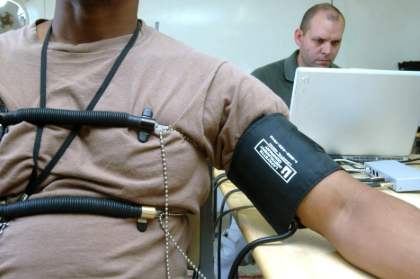
During a test, the machine records things like heart rate, breathing patterns, blood pressure, and skin conductivity (which basically measures sweating). The idea is simple—when people lie, they get nervous, and that nervousness shows up in the body.
Sounds reasonable, right?
But here’s where it gets messy. People get nervous for all kinds of reasons. Not just because they’re lying.
Imagine being asked, “Did you steal that money?” even if you didn’t. Your heart might still race. Your palms might still sweat. Not because you’re guilty, but because you’re under pressure and feel accused.
The machine doesn’t know the difference.
How a Polygraph Test Actually Works
A typical session isn’t just a rapid-fire interrogation. It’s slower and more structured than that.
First, there’s a pre-test phase. The examiner talks with you, explains the process, and goes over the questions. This part matters more than most people realize. It sets expectations and, in a way, primes your responses.
Then comes the test itself. You’re hooked up to sensors—usually around your chest, arm, and fingers. The examiner asks a mix of questions:
- Neutral ones (“Is your name John?”)
- Control questions (designed to provoke a mild reaction)
- Relevant questions (the ones that actually matter)
The comparison between your responses to these questions is what the examiner uses to form an opinion.
Notice the wording there: an opinion.
Because despite the charts and graphs, interpretation still plays a role.
Why People Believe in It
Let’s be honest—part of the polygraph’s power comes from psychology, not science.
If someone believes the machine can “see through them,” they might confess before the test even starts. That alone makes it useful in certain situations. It creates pressure. It nudges people toward honesty, or at least toward revealing more than they planned to.
There’s a classic scenario: a suspect sits down, sees the equipment, hears that it’s highly accurate, and suddenly decides to “come clean.” Not because the machine forced them, but because they believe it will.
That belief is doing a lot of the work.
The Accuracy Debate
This is where things get controversial.
Supporters will tell you polygraphs are highly accurate—sometimes quoting numbers like 80–90%. Critics will push back and say the results are unreliable, inconsistent, and influenced by too many variables.
Both sides have a point.
In controlled settings, with trained examiners and cooperative subjects, polygraphs can be fairly accurate. But real life isn’t controlled. People are anxious, angry, confused, or trying to outsmart the system.
And that’s the problem.
Some people can lie without much physiological response. Others react strongly even when telling the truth. That variability makes the results less dependable than many assume.
It’s one reason polygraph results are often not admissible in court.
Can You Beat a Polygraph?
This question comes up a lot, and the honest answer is… maybe.
There are known techniques people try. Controlling breathing. Creating physical discomfort during control questions (like pressing toes into the floor). Mentally distracting themselves.
The idea is to manipulate the baseline so the “relevant” questions don’t stand out.
Does it work?
Sometimes. But it’s not foolproof.
A skilled examiner may notice unusual patterns. And trying too hard to control your responses can backfire, making your data look even more suspicious.
Still, the very fact that this question exists—and that people sometimes succeed—tells you something about the limitations of the test.
Real-Life Uses: Where It Shows Up
Polygraphs aren’t just for crime dramas.
They’re used in various settings, some more controversial than others.
In law enforcement, they can be part of investigations or used to screen potential hires. Certain government agencies rely on them during background checks, especially for sensitive positions.
Then there’s the more personal side. Private polygraph tests are sometimes used in relationship disputes. Think suspected infidelity, hidden debts, or family conflicts.
That’s where things can get awkward fast.
Picture a couple sitting in a small office, one of them wired to a machine, answering questions about trust. Even if the results come back “truthful,” the situation itself can leave a mark.
Because the issue isn’t always the answer. It’s the need for the test in the first place.
The Human Factor
Here’s something people don’t talk about enough: the examiner matters.
A lot.
Two different examiners could look at the same data and reach slightly different conclusions. Experience, training, and even subtle biases can influence interpretation.
That doesn’t mean the process is random, but it does mean it’s not purely objective either.
And then there’s the person being tested. Their personality, mental state, and even cultural background can affect how they respond under pressure.
Some people stay calm no matter what. Others get anxious just being in a formal setting.
The polygraph doesn’t adjust for that. It just records what it sees.
Why It Still Exists
With all these limitations, you might wonder why polygraph testing hasn’t faded away.
The answer is simple: it still has practical value.
Not as a truth machine, but as a tool.
It can encourage disclosure. It can guide investigations. It can add another layer of information, even if that information isn’t definitive.
Think of it less like a judge and more like a nudge.
In some cases, that’s enough.
A Quick Scenario
Imagine this: a company suspects internal theft. They bring in a polygraph examiner and ask a small group of employees to take the test.
One person reacts strongly to key questions. Another stays steady.
Does that prove anything?
Not really.
But it gives the investigators a direction. Someone to talk to more. Something to dig into.
That’s often how polygraphs are used—not to close a case, but to move it forward.
Should You Trust the Results?
If you ever find yourself dealing with a polygraph—whether personally or professionally—it’s worth keeping a balanced view.
Don’t treat the result as absolute truth. But don’t dismiss it entirely either.
Context matters.
Who conducted the test? What kind of questions were asked? What’s the situation surrounding it?
A “failed” polygraph doesn’t automatically mean someone is lying. And a “passed” one doesn’t guarantee honesty.
It’s a piece of the puzzle. Not the whole picture.
The Emotional Side
There’s also something more subtle going on here.
Polygraph tests tap into a deeper human concern: the desire to know the truth, especially when trust is shaky.
But machines can’t fully resolve that.
Even if a result comes back clean, doubt can linger. And if it comes back questionable, it can create new doubts rather than settle anything.
That’s why relying solely on a polygraph in personal matters can be risky. It might answer a question, but it won’t necessarily fix the underlying issue.
Final Thoughts
The polygraph test sits in an interesting space—part science, part psychology, part theater.
It measures real physical responses, but those responses don’t map neatly to truth or deception. People are more complicated than that.
So while the polygraph can be useful, it’s not a shortcut to certainty.
If you take anything away from this, it’s this: the machine doesn’t know if you’re lying. It only knows how your body reacts. Everything else is interpretation.
And when it comes to truth, interpretation is where things get complicated.