
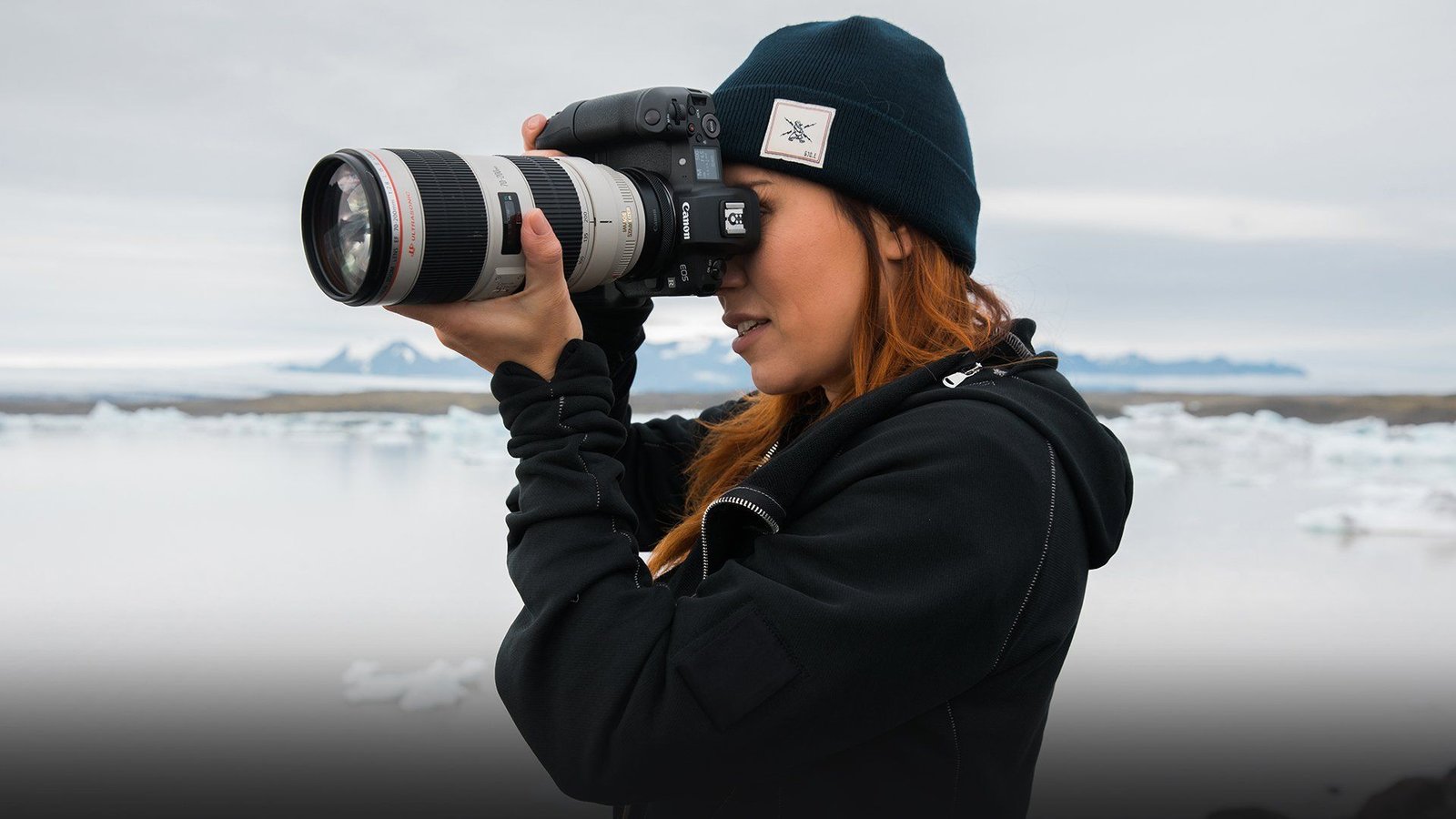
The right gear won’t instantly make you a pro, but when you combine a modern system with solid technique, things get interesting very quickly. That’s exactly what happens when you pair the Canon EOS R system with fast-paced subjects like wildlife and sports.
The EOS R platform gives you advanced autofocus, high-speed shooting and powerful customisation. To really unlock it, you need to move beyond fully automatic modes and start shaping the camera around the way you shoot.
Below is a practical, technique-driven guide to help you squeeze every bit of performance from the system in dynamic, real-world conditions.
Dialling In Autofocus for Moving Subjects
Autofocus is the heart of any action setup. For wildlife and sports, you want the camera doing as much of the tracking work as possible while you focus on timing and composition.
Start by using AI Servo (continuous AF) as your default. This tells the camera to constantly adjust focus as your subject moves, instead of locking focus once and hoping for the best. Pair this with subject tracking and, where available, eye or face detection for athletes and larger animals at closer distances.
The AF point layout on the EOS R system makes it easy to move focus with the joystick or touchscreen. Many photographers set up back-button focus, assigning AF to the rear AF-ON button and leaving the shutter for metering and firing. This gives finer control when you need to lock focus and recompose, or quickly stop tracking a subject without changing modes.
In crowded scenes—like a player running through defenders or a bird flying across a busy background—it often helps to tighten your AF area to a smaller zone, so the camera prioritises what you’ve deliberately placed under the point instead of grabbing contrasty objects nearby.
Mastering Shutter Speed, Aperture and ISO for Action
Fast movement demands fast shutter speeds, but the exact values depend on what you’re shooting and the effect you want.
For freezing action, think in these ranges:
- Field sports, running athletes: around 1/1000s or faster
- Fast birds in flight, motorsport: 1/1600s to 1/3200s
- Larger, slower wildlife (grazing animals, perched birds): 1/500s to 1/800s is often enough
If you want a sense of motion—like blurred wheels or background streaks—experiment with panning at slower speeds, such as 1/125s to 1/250s, while tracking the subject smoothly.
Aperture work is about balancing subject isolation and depth of field. Wide apertures (f/2.8, f/4) give you beautiful separation but a thinner plane of focus, which can be risky when subjects move unpredictably. Stopping down slightly to f/5.6 or f/6.3 often gives a bit more breathing room without losing too much background blur.
Auto ISO is your friend here. Set a sensible maximum ISO based on your camera’s noise performance and let the body float ISO to maintain your chosen shutter and aperture. In low light stadiums or dawn/dusk wildlife scenarios, this setup is often the difference between sharp, usable shots and a card full of motion blur.
Using Burst Modes Intelligently
High frames per second are often marketed as the headline feature for action work, but simply holding down the shutter isn’t a complete strategy.
Use high-speed continuous shooting for peak moments—tackles, jumps, birds taking off—but be deliberate. Anticipate the action, half-press to pre-focus and then fire shorter bursts as the moment unfolds. This reduces buffer overload and makes culling easier later.
Review your sequence occasionally in the field. You’ll quickly see if you’re firing too early or too late, and can adjust your timing. Over time, you’ll learn the rhythm of different sports and animal behaviours, and rely less on “spray and pray.”
Custom Buttons and Menus for Faster Handling
One of the biggest advantages of the EOS R system is customisation. Instead of living in menus, move critical functions to buttons you can hit without taking your eye off the viewfinder.
Many wildlife and sports photographers like to assign:
- AF-ON for back-button focus
- A custom button for AF method (switching between wide tracking and a single point/zone)
- A button or quick menu slot for drive mode (single, continuous, high speed)
- A custom mode (C1, C2, etc.) for instant recall of a complete “action” setup
For example, you might set C1 as your daytime field sports profile—fast shutter, continuous AF, high-speed burst—then keep another custom mode tuned for low-light or panning work. Switching between them mid-game takes seconds and avoids missing plays because you were buried in settings.
Tracking Wildlife: Fieldcraft Meets Technology
No camera system can replace understanding animal behaviour. The best wildlife images are usually the result of patience, observation and anticipating what your subject is likely to do next.
Use the EOS R’s silent or quieter shutter modes when you are close to easily spooked animals. Combined with telephoto lenses, this helps you capture natural behaviour instead of animals reacting to your presence.
Continuous AF with subject tracking is particularly helpful for birds in flight and fast mammals, but you still need good technique: stable stance, smooth panning and keeping your focus point roughly on the subject. Practice on common birds or dogs at the park to develop muscle memory before you head into more critical situations.
Lens Choices and Stabilisation
For sports and wildlife, telephoto zooms are the workhorses: something in the 70–200mm or 100–400mm range covers a huge amount of ground. In tighter arenas or indoor sports, a fast 70–200mm can be ideal; for open fields and longer distances, extended zooms shine.
In-lens stabilisation (and, on some models, in-body stabilisation) helps when light is low or when you are working at the edge of your focal length hand-held. It is not a substitute for fast shutters when subjects are moving quickly, but it does reduce camera shake and can help with panning at slower speeds.
If you are building or expanding a sports/wildlife kit, browsing options built around the Canon mirrorless camera system from specialist retailers like Diamonds Camera is an efficient way to match bodies, lenses and accessories that are designed to work together.
Refining Your Workflow in the Field
Finally, don’t underestimate the impact of a tight on-location workflow. Format cards before important shoots, set your file naming or rating habits, and use in-camera star ratings to mark promising sequences between breaks in the action.
Chimping (constantly checking the screen) can make you miss moments, but selective review is helpful. Check occasionally for focus accuracy, exposure and clipping, then get back to viewing through the EVF where you can respond instantly to movement.
Over time, you’ll develop a rhythm: predict, pre-focus, track, shoot in controlled bursts, quickly review key sequences, adjust, and repeat. With practice, the technical side of the EOS R system fades into the background and you can focus on what really matters—timing, storytelling and capturing the intensity of wildlife and sport in a way that feels alive.