
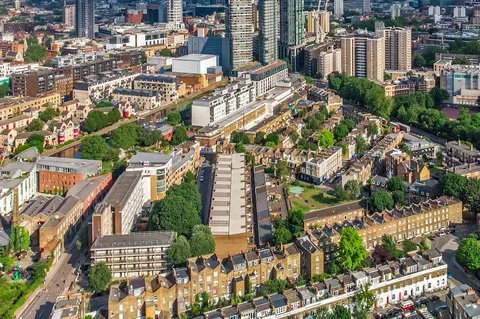
Islington has one of the highest householder application refusal rates in London. Not because the officers are difficult. Because the borough is almost entirely covered by conservation areas and the planning policies are among the strictest in the capital.
If you are planning an extension here and hire the wrong architect, the odds are stacked against you. A good architect islington practice knows exactly what the borough expects and designs to satisfy it from the start. A generalist who treats Islington like any other borough walks straight into a refusal.
Why Islington Is So Strict
Islington is small, dense, and historically significant. Georgian and Victorian terraces line streets that have barely changed in appearance for a hundred and fifty years. Canonbury. Barnsbury. Highbury. Almost every residential street sits within a designated conservation area.
Conservation area designation removes permitted development rights and subjects every alteration to scrutiny against the character of the area. The council assesses whether your extension preserves or enhances that character. And in streets of remarkably consistent period terraces, anything that disrupts the consistency gets refused.
The borough also has limited space. Houses are packed together. Gardens are small. Extensions affect neighbours more directly than in suburban areas where properties have more separation. Overlooking, loss of light, and loss of outlook are assessed carefully because the proximity of neighbours makes these impacts more acute.
Strict policies plus consistent streetscapes plus close neighbours equals a high refusal rate. Not because the council wants to say no. Because the bar for approval is genuinely high.
What Gets Refused
Contemporary designs that ignore the period context. A glass and steel extension on a Georgian terrace gets refused because it disrupts the conservation area character. The council wants extensions that respect the existing architecture not contrast with it.
Rear extensions that are too deep. In Islingtons small gardens a three metre extension can dominate the outdoor space and overshadow neighbours. The council assesses the impact on the garden and the neighbouring properties carefully.
Roof alterations visible from the street. Front facing dormers. Roof terraces that overlook neighbours. Changes to the roofline that disrupt the consistent appearance of the terrace. All face heavy scrutiny.
Materials that dont match. Render on a brick terrace. Modern bricks that dont complement the existing stock. Windows with the wrong proportions. The council notices material details that other boroughs might overlook.
What Gets Approved
Extensions that respond to the conservation area character. Matching brick. Appropriate proportions. Roof forms that relate to the existing building. Designs that look like they could have always been part of the house.
Applications supported by thorough documentation. A heritage statement explaining how the design respects the conservation area. A design and access statement justifying every material and proportion. Evidence that the architect has read the conservation area character appraisal and designed accordingly.
Schemes that demonstrate awareness of neighbours. Designs that minimise overlooking. That preserve neighbouring light. That respect the rhythm of rear extensions along the terrace. The council wants to see that you have considered the impact on the people next door.
Proposals that follow established precedent. If neighbouring properties have similar approved extensions your application is stronger. The council finds it harder to refuse something consistent with what they have already approved on the same street.
Why Local Knowledge Is Essential
An architect who works in Islington regularly knows the specific conservation area appraisals for each part of the borough. They know what Canonbury expects versus Barnsbury versus Highbury. They know which officers assess which areas. They know what has been approved and refused on specific streets.
This knowledge cannot be acquired from a planning textbook. It comes from completing projects in the borough. From submitting applications and learning what succeeds. From building relationships with officers and understanding their priorities.
Space is tight in Islington which is why clever design matters so much. On a corner plot or a property with a side return, a wrap around extension can create significant additional space by combining a rear extension with a side return infill. But in a conservation area this needs careful handling. The design must respect the existing building, minimise the impact on neighbours, and use materials that complement the period character. Done well it gets approved. Done carelessly it becomes another refusal statistic.
The Pre Application Advantage
In a borough with such a high refusal rate, pre application advice is not optional. For a few hundred pounds you get the officers view on your proposal before submitting the formal application.
This feedback shapes the design. The officer might flag the depth as excessive. Suggest a different roof form. Recommend specific materials. Identify a concern about overlooking. Each piece of feedback is a refusal reason removed before the formal submission.
A good Islington architect always recommends pre application advice. They know the refusal rate. They know that submitting blind in this borough is a gamble. The pre application process converts a gamble into a calculated submission with the officers concerns already addressed.
What a Refusal Actually Costs
The application fee. Lost. The architect fees for drawings that were refused. Wasted. The months of waiting for a decision that was no. The refusal sitting permanently on your planning history.
And the resubmission. A refused application means redesigning and resubmitting. More fees. More waiting. More uncertainty. The total cost of a refusal can be five to ten thousand once you add wasted fees, the redesign, and the second application.
In a borough where the refusal rate is high, the cost of hiring an architect who doesnt understand Islington is not just the fee difference. Its the high probability of a refusal that doubles your costs and adds months to your timeline.
The Honest Recommendation
In Islington hire an architect who works in Islington regularly. Check how many extensions they have completed in the borough. In conservation areas specifically. Ask about their approval rate. Ask whether they use pre application advice routinely.
The refusal rate in this borough is high enough that the choice of architect genuinely determines whether your project succeeds. A specialist who knows the borough gets approved. A generalist who treats Islington like anywhere else joins the high percentage who get refused.
Six to eight months from first conversation to completion when the application succeeds first time. Ten to fourteen months when it gets refused and resubmitted. The difference is local knowledge.